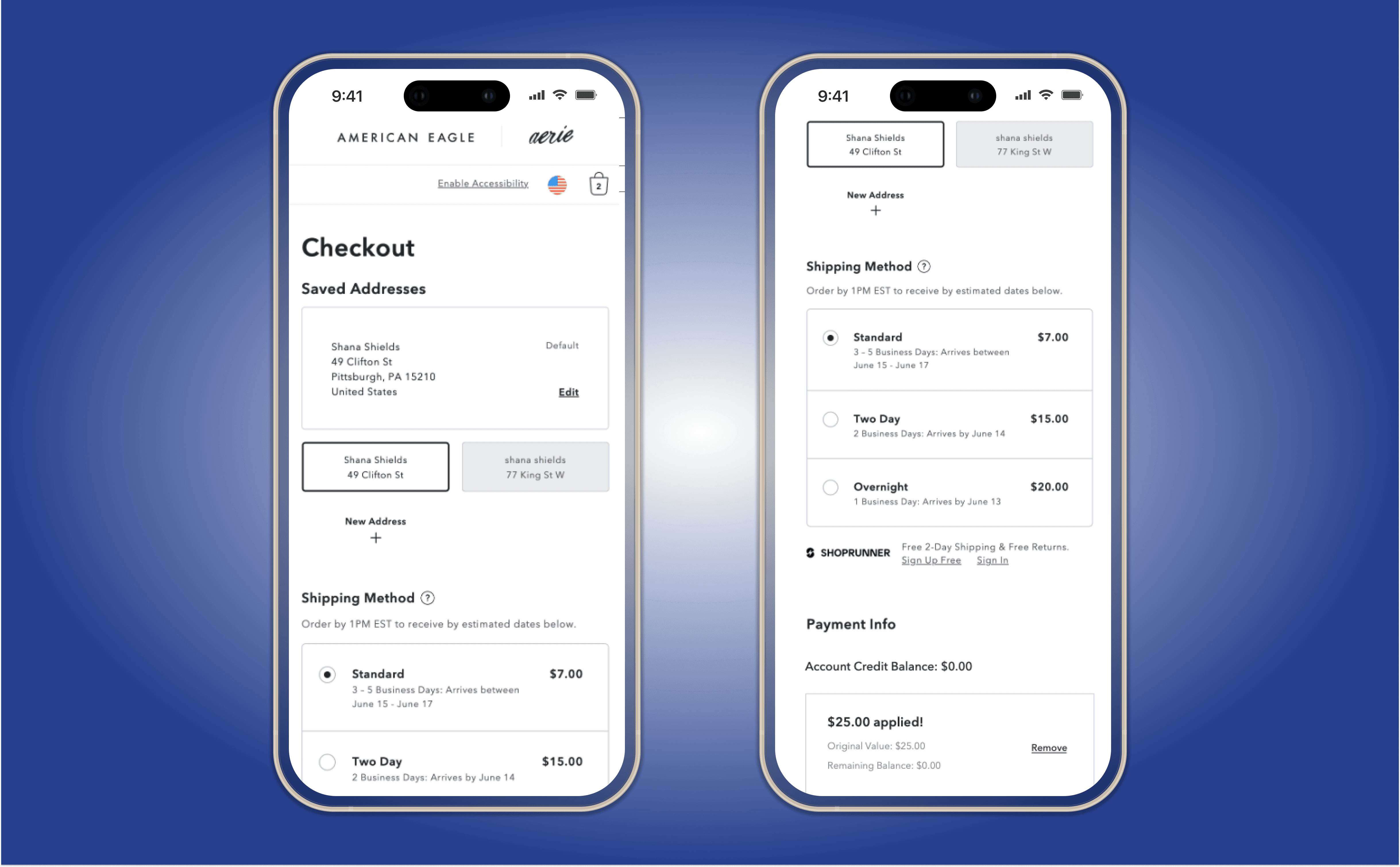
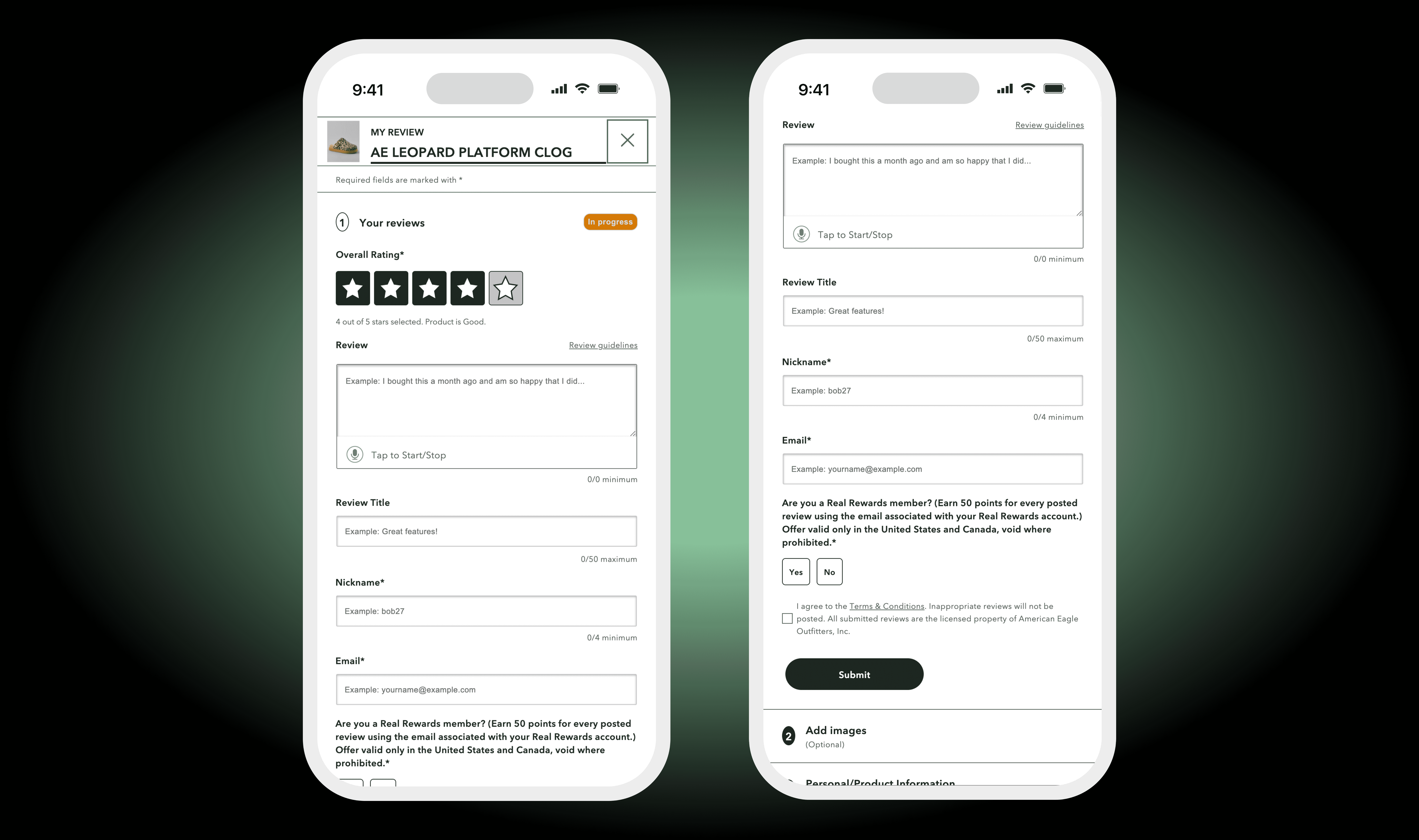
order history reimagined
Building a scalable post-purchase platform that improves customer confidence and reduces operational friction.
00
problem
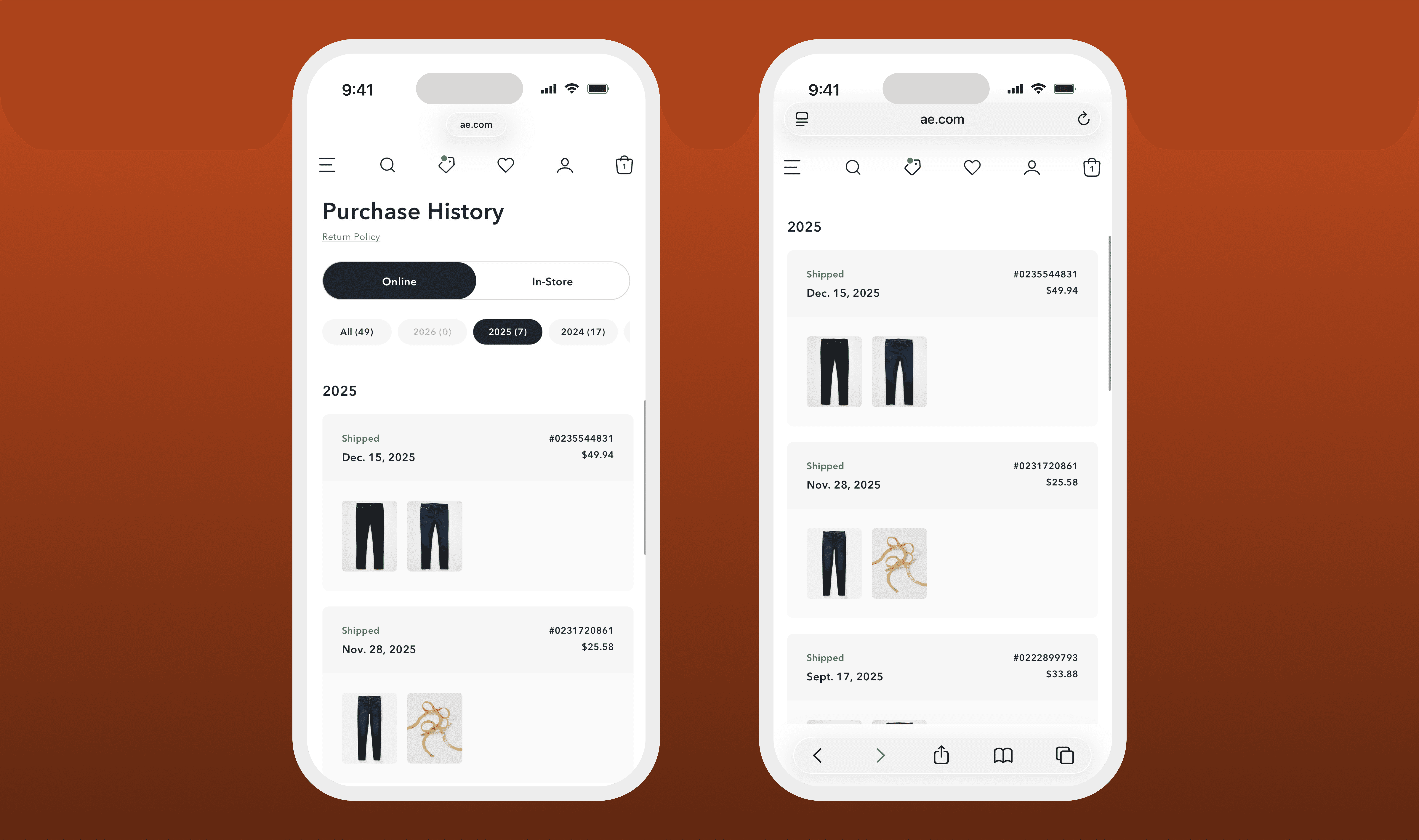
Customers only go to order history when something matters. They need to track a package, start a return, or find a receipt. The experience they had was confusing and inconsistent. Status labels were unclear, important actions were hard to find, and store and online orders behaved differently. This made completing simple tasks frustrating, increased support calls, and limited the platform’s ability to grow for future needs.
solution
We redesigned order history as a decision-support system that makes it easy for customers to act with confidence. Modular order cards surface tracking, returns, and reorder options immediately. A unified timeline communicates status clearly, and the architecture was designed to scale across channels and future features. The result is a faster, clearer, and more trustworthy experience that sets the foundation for omnichannel growth.
Order history is one of the highest-intent surfaces in the post-purchase journey. Customers don’t visit this page to browse — they come when it matters:
Tracking a package
Starting a return
Finding a receipt
Resolving an issue
Yet the experience had evolved piecemeal around backend systems, not customer needs. Status labels were inconsistent, actions were hard to find, and store and online purchases behaved differently. At the same time, expanding omnichannel capabilities exposed a lack of scalable foundation.
This presented an opportunity: to redesign not just the interface, but the underlying experience model.
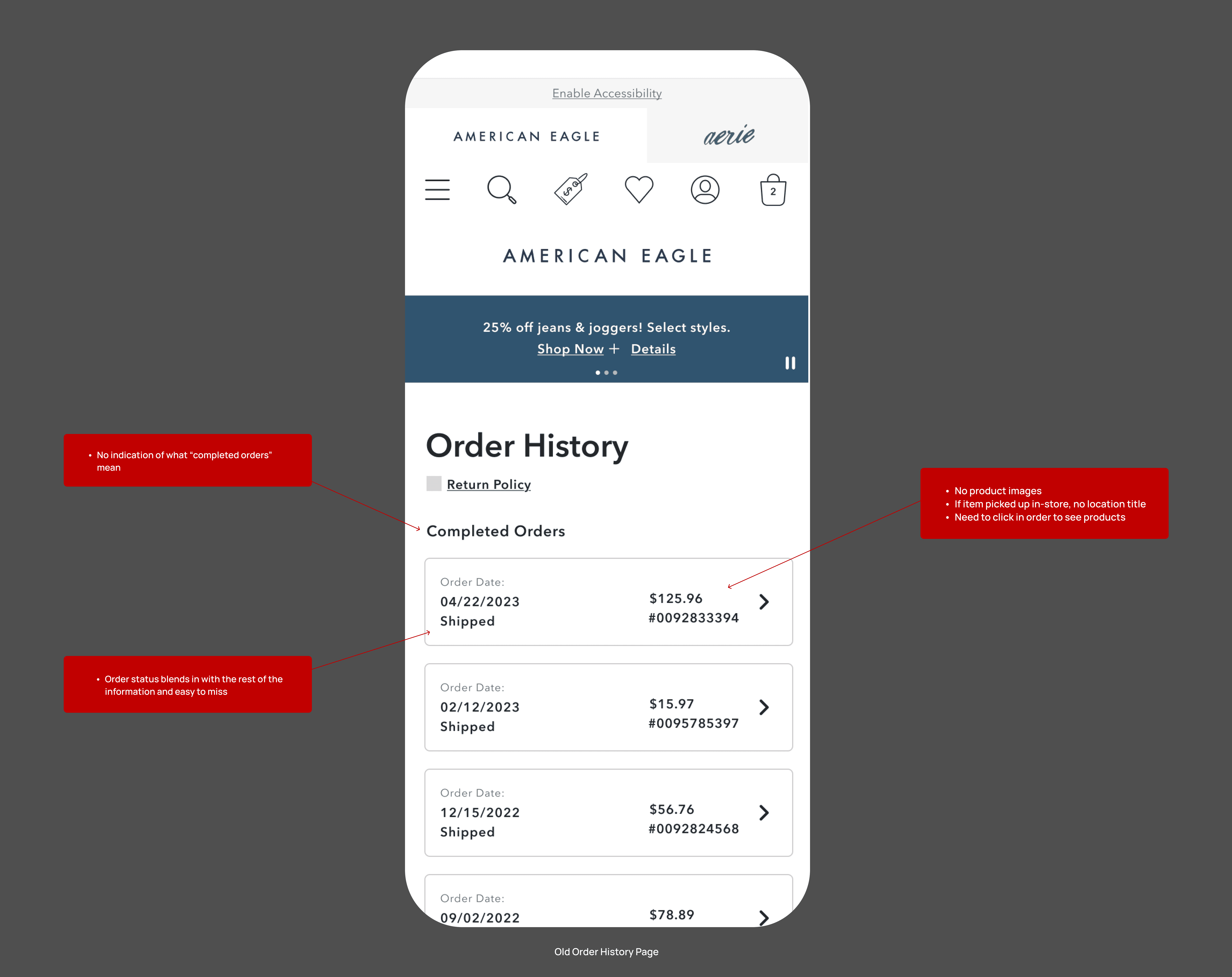
Through research, we discovered:
Interactions are task-focused and time-sensitive — clarity is more important than exploration.
Confusion came from buried actions and inconsistent status labels.
Customers think in terms of items and actions, not backend order IDs, which the old system failed to reflect.
Every moment on this page matters emotionally — frustration grows quickly if customers can’t complete the task they came for.
Guiding Principles
We defined three principles to guide the redesign:
Clarity first — surface what matters most immediately
Action over information — make it easy to complete the task at hand
Systems that scale — create a foundation for future omnichannel features
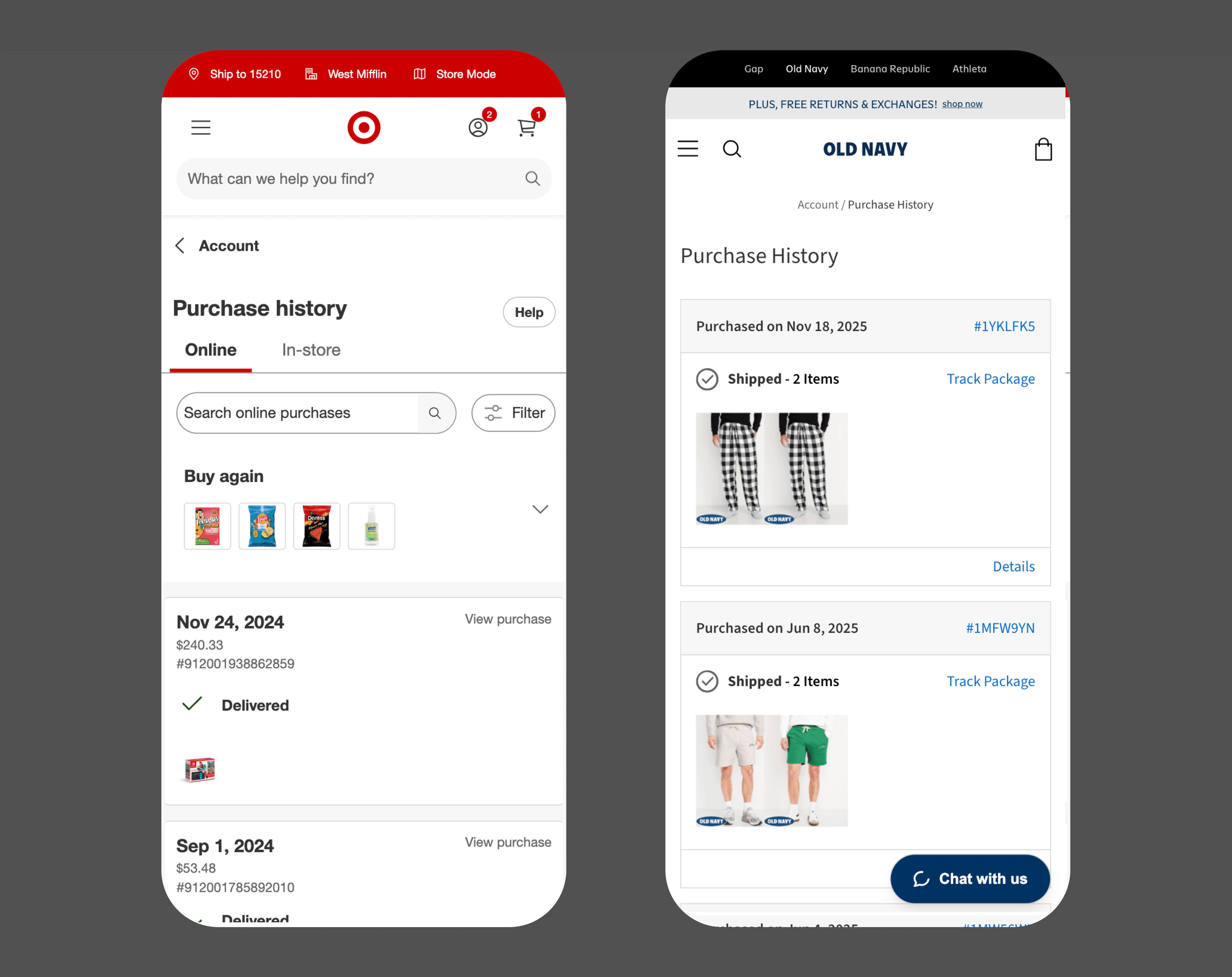
I led competitive analysis, behavioral research, and stakeholder interviews to understand how customers interacted with order history across online and in-store purchases.
Key insights:
Customers frequently struggled to find actionable information quickly
They preferred item-focused views over backend order IDs
Task completion was often delayed or abandoned due to unclear labels or hidden actions
We approached this as a decision-support problem, not just a UI update: how can we make order history a space where customers feel confident and empowered?
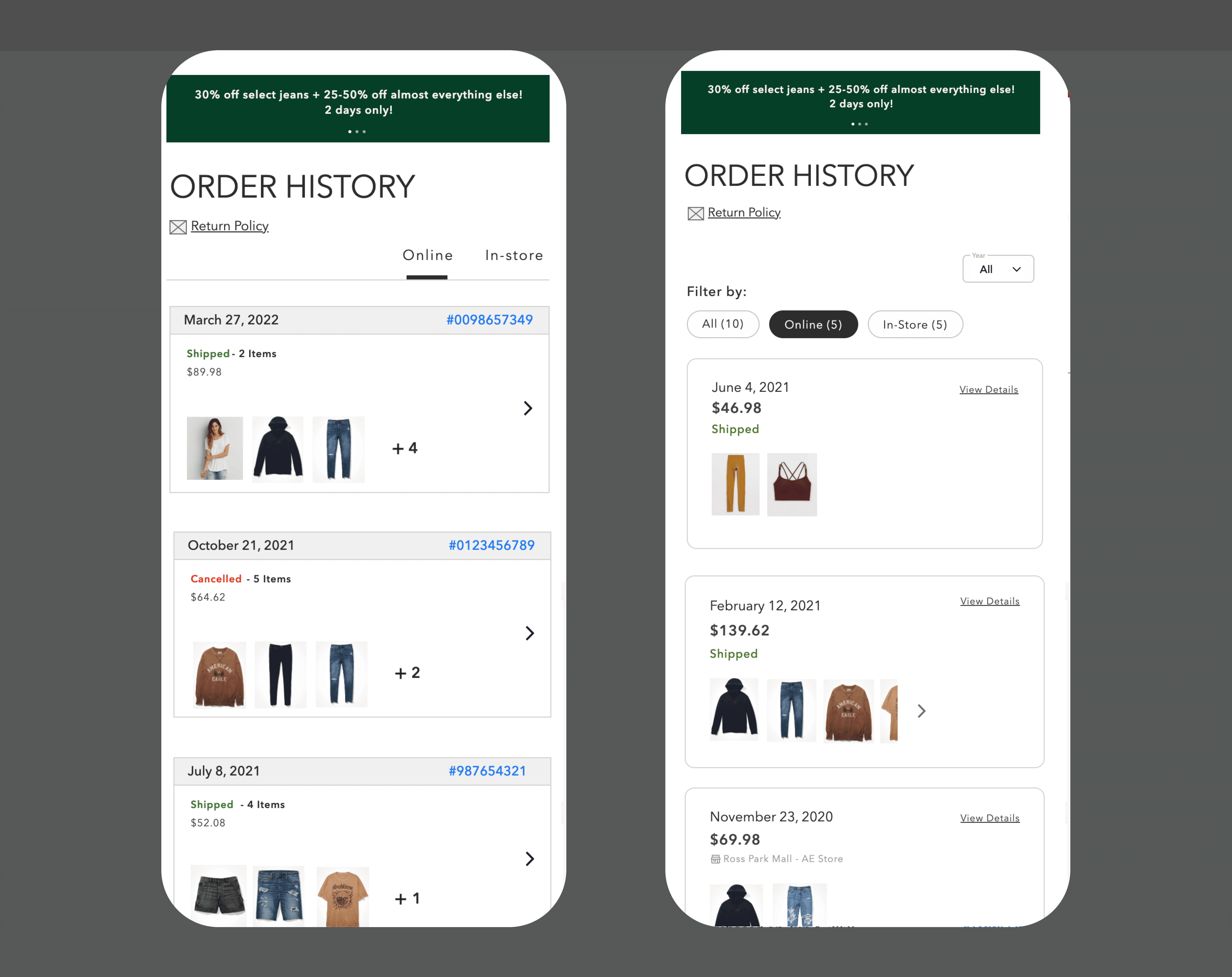
I led iterative wireframing and prototyping, working closely with engineering to respect backend constraints while maximizing usability.
Explored multiple hierarchies and layouts
Balanced simplicity with system limitations
Refined a modular, action-first architecture
Ensured the design supported both online and store purchases consistently
Before launch, we tested interactive prototypes with real users to validate clarity and task efficiency.
Goals
Ensure customers could quickly find the actions they came for
Confirm status labels were clear and understandable
Identify pain points before engineering investment
Key Learnings
Customers immediately understood item-focused organization
Prominent task-driven actions reduced hesitation and errors
Minor labeling tweaks improved speed and confidence
Testing also built stakeholder alignment and reduced perceived risk for engineering, ensuring smoother implementation.
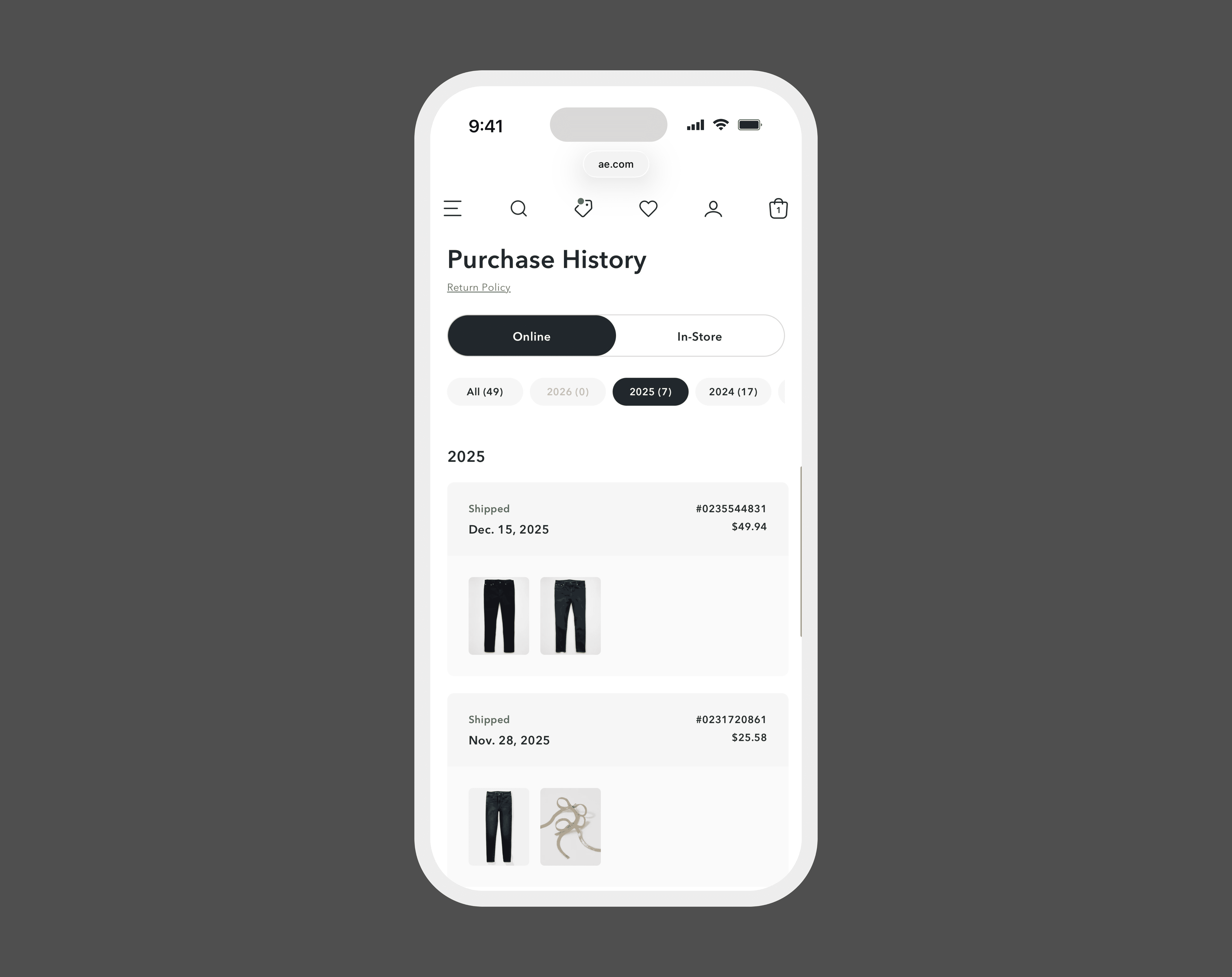
Order List
Clear, item-focused organization
Immediate visibility of actionable items (returns, tracking, receipts)
Returns Actions
Consistent behavior across online and in-store purchases
Modular design to enable future omnichannel features
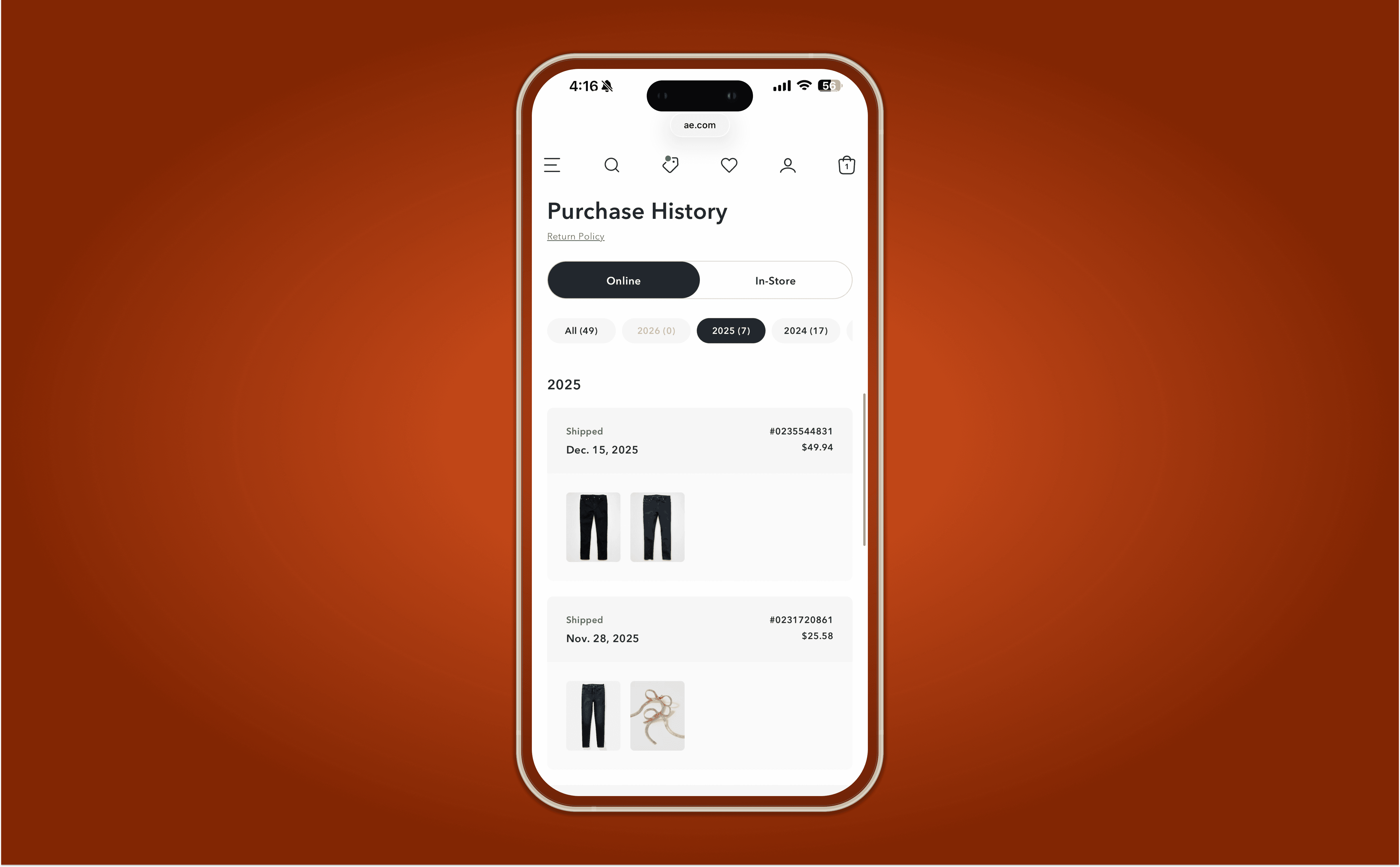
The result: customers could complete tasks faster, with less confusion, and feel confident in the post-purchase process.
Customer Impact
Faster task completion
Clearer understanding of order status
Reduced frustration and anxiety
Business Impact
Decreased support contacts
Increased engagement with post-purchase features
Reduced confusion drives stronger brand trust
Organizational Impact
Reusable component library for future scalability
Cross-team alignment for faster iteration
Modular foundation supports upcoming omnichannel initiatives
By turning a static list into a decision-support system, we increased confidence, reduced friction, and created a foundation for post-purchase innovation.
Order history may seem operational, but it is one of the most emotionally charged moments in the customer journey. Thoughtful design, validated through user testing, can transform frustration into clarity, ensuring that every post-purchase interaction reinforces confidence and trust.
01
02
see also