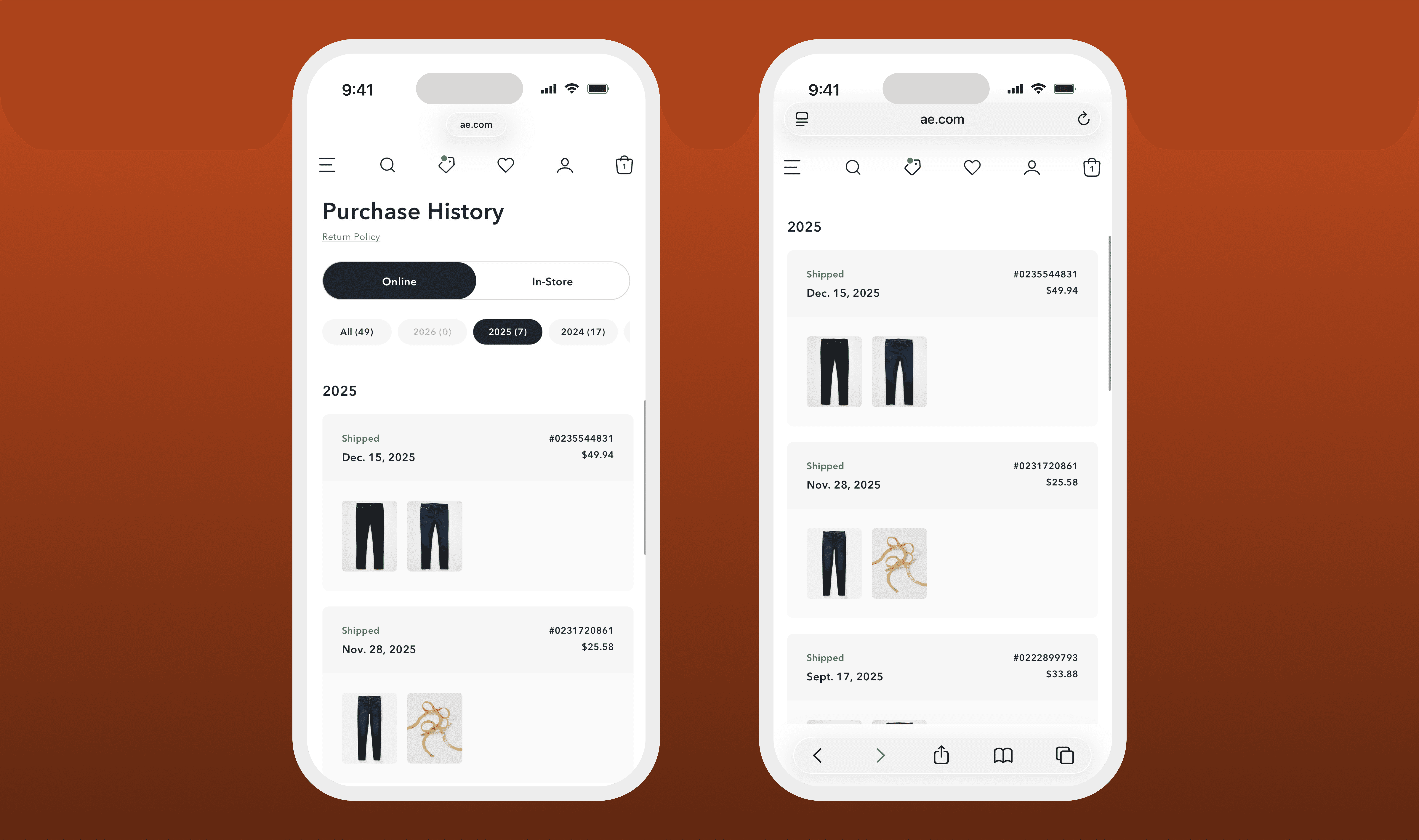
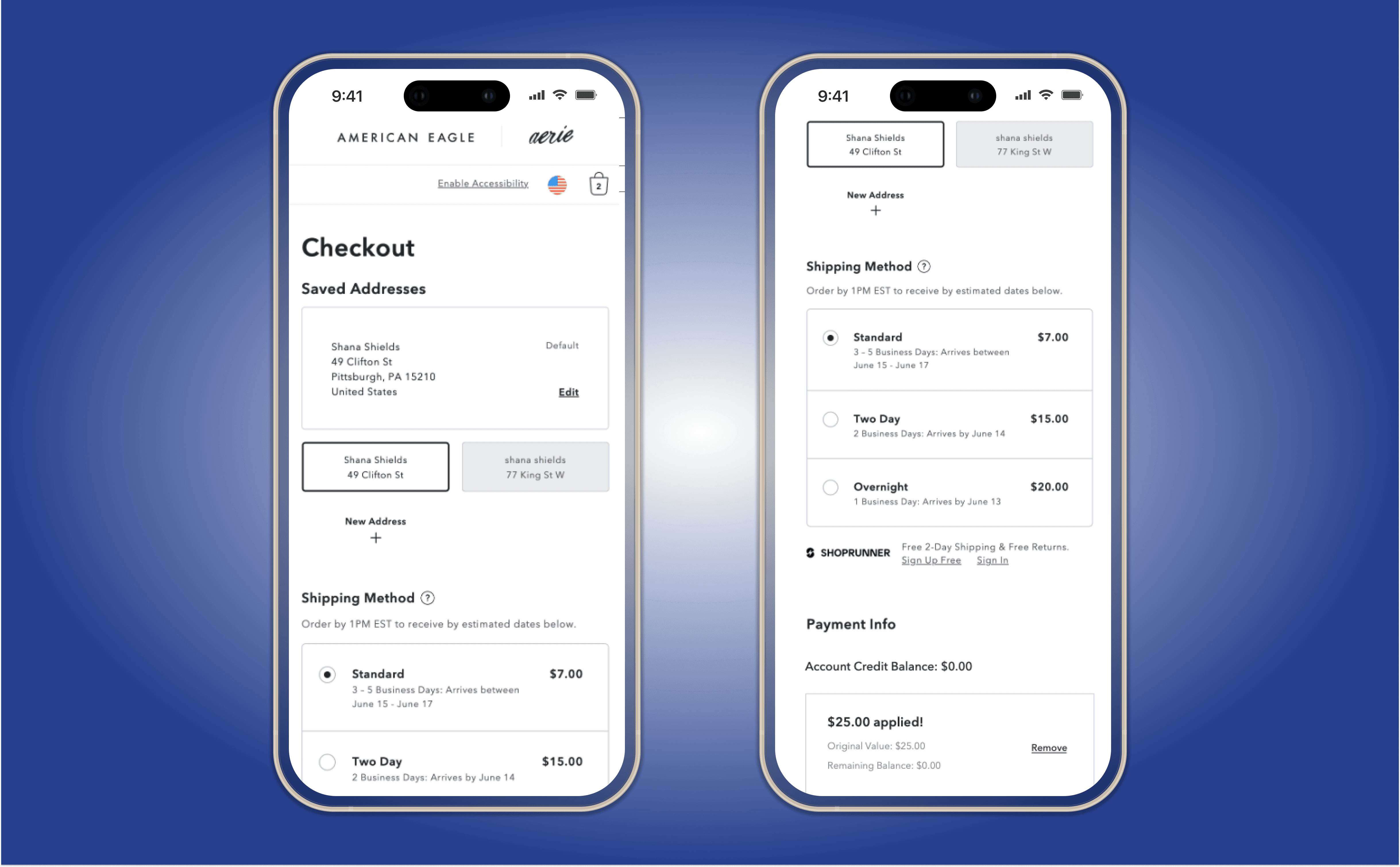
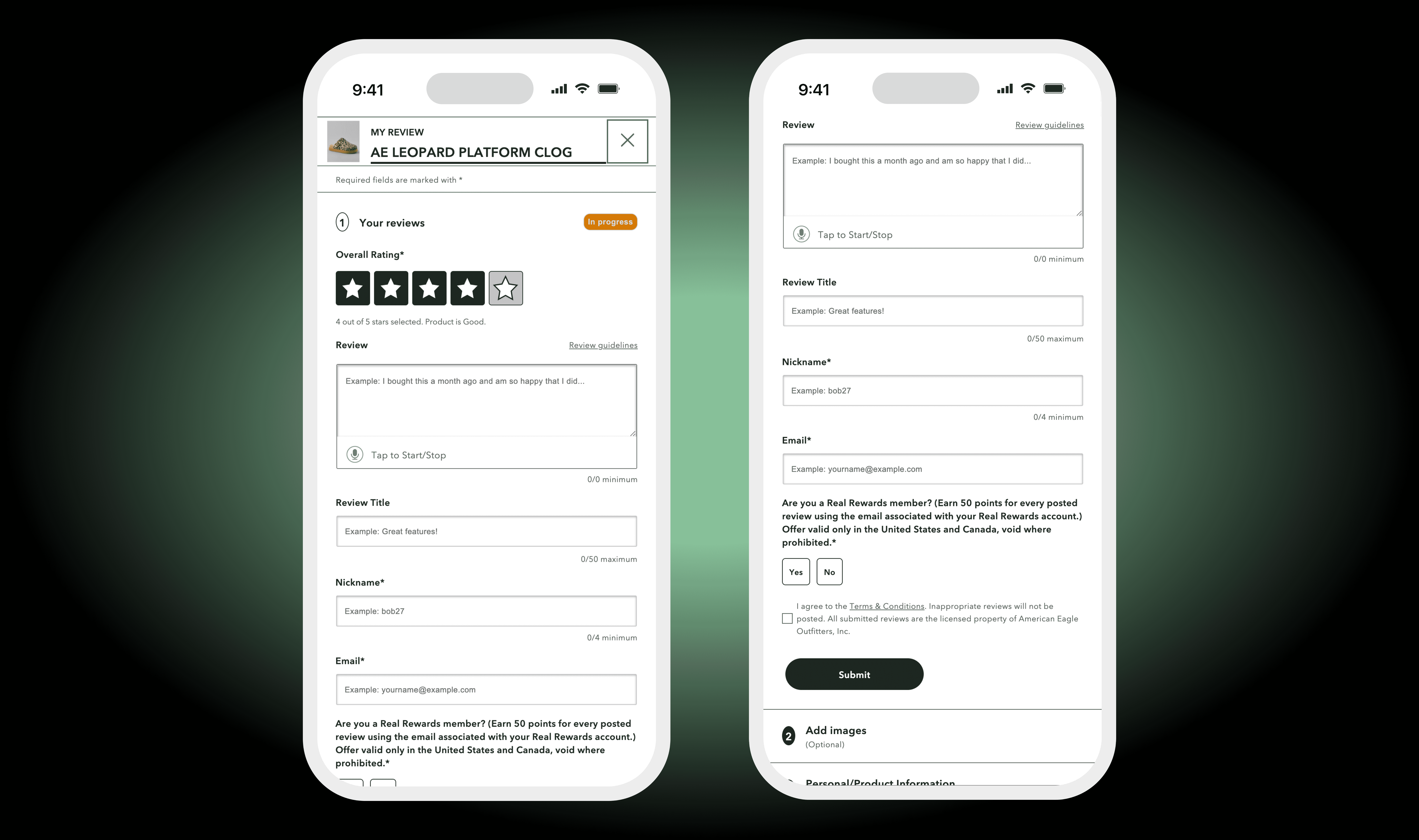
store purchase history
Designed a strategy to unify in-store and online purchases, making complex transactions clear, actionable, and easy to understand for customers.
problem
Before this project, in-store purchase history didn’t exist. Customers had to manually save their receipts, and if a receipt was lost, only cashiers could retrieve the information. This created friction, frustration, and lack of trust in post-purchase management. Customers couldn’t track returns, reorder items, or integrate store purchases into their online account, limiting visibility, loyalty engagement, and opportunities for omnichannel experiences.
solution
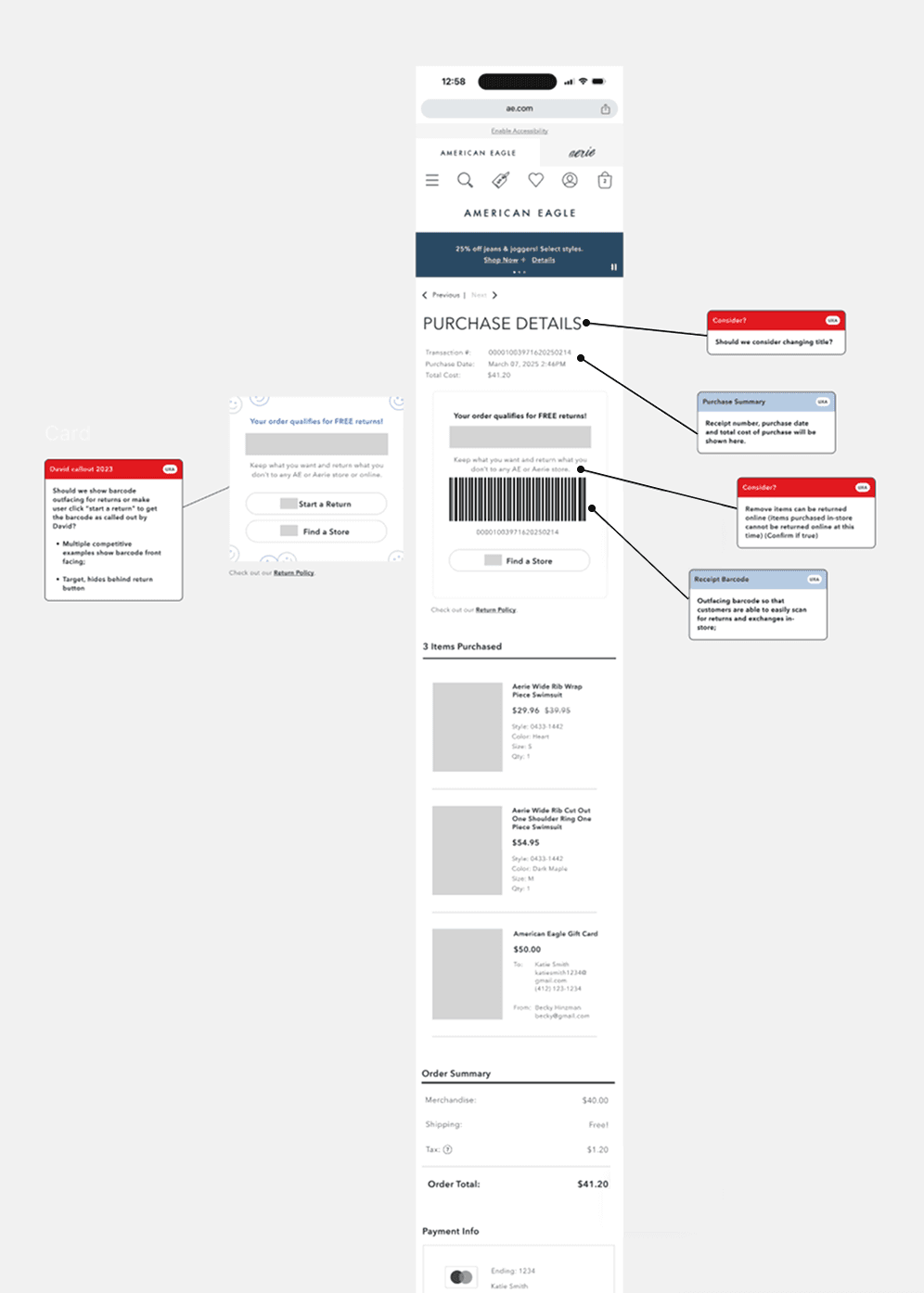
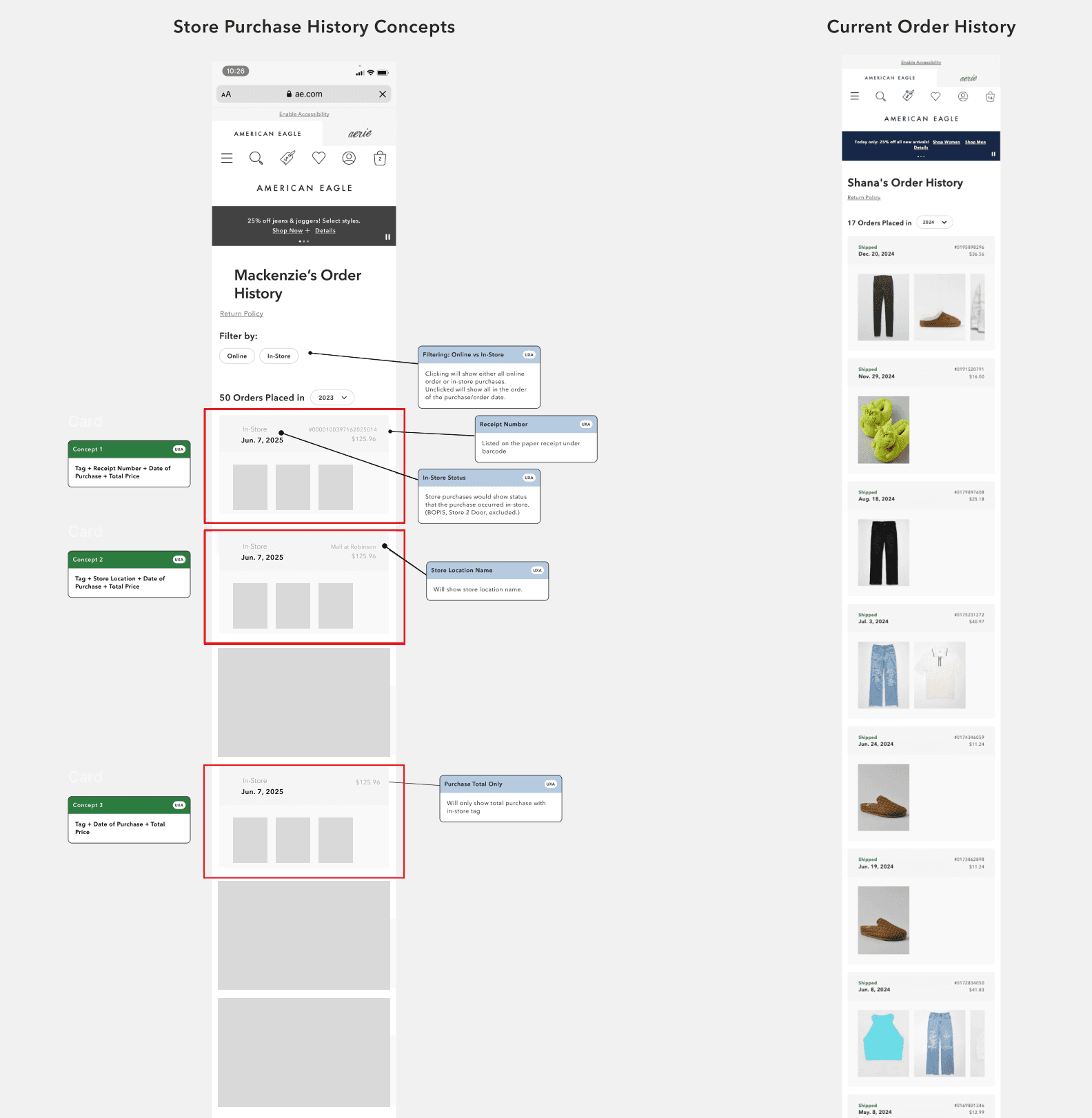
I led the strategy to define what a store purchase history system should include and how it should work, translating complex receipts into clear, actionable concepts. I analyzed different types of store transactions, conducted a competitive analysis, and collaborated closely with stakeholders to integrate the feature seamlessly into the new unified order history framework. I also acted as a knowledge resource to designers, leveraging prior wireframes and guiding the implementation of a modular, scalable system.
The online order history launched a year ago gave customers visibility into their digital purchases. But in-store purchases remained siloed. Customers had to save receipts manually, and if a receipt was lost, they relied on cashiers for assistance.
Integrating in-store purchases into customer accounts created an opportunity to deliver a unified, omnichannel post-purchase experience, improve trust, reduce support inquiries, and lay the foundation for future loyalty and engagement features.
Why It Mattered
Post-purchase moments are high-intent and emotionally charged. When customers can’t see their purchases or take the actions they need quickly, confidence drops and frustration rises.
By providing seamless integration of in-store and online purchases, we could:
Reduce friction and support needs
Increase customer confidence and satisfaction
Deliver a consistent, omnichannel post-purchase experience
Enable future loyalty and engagement opportunities
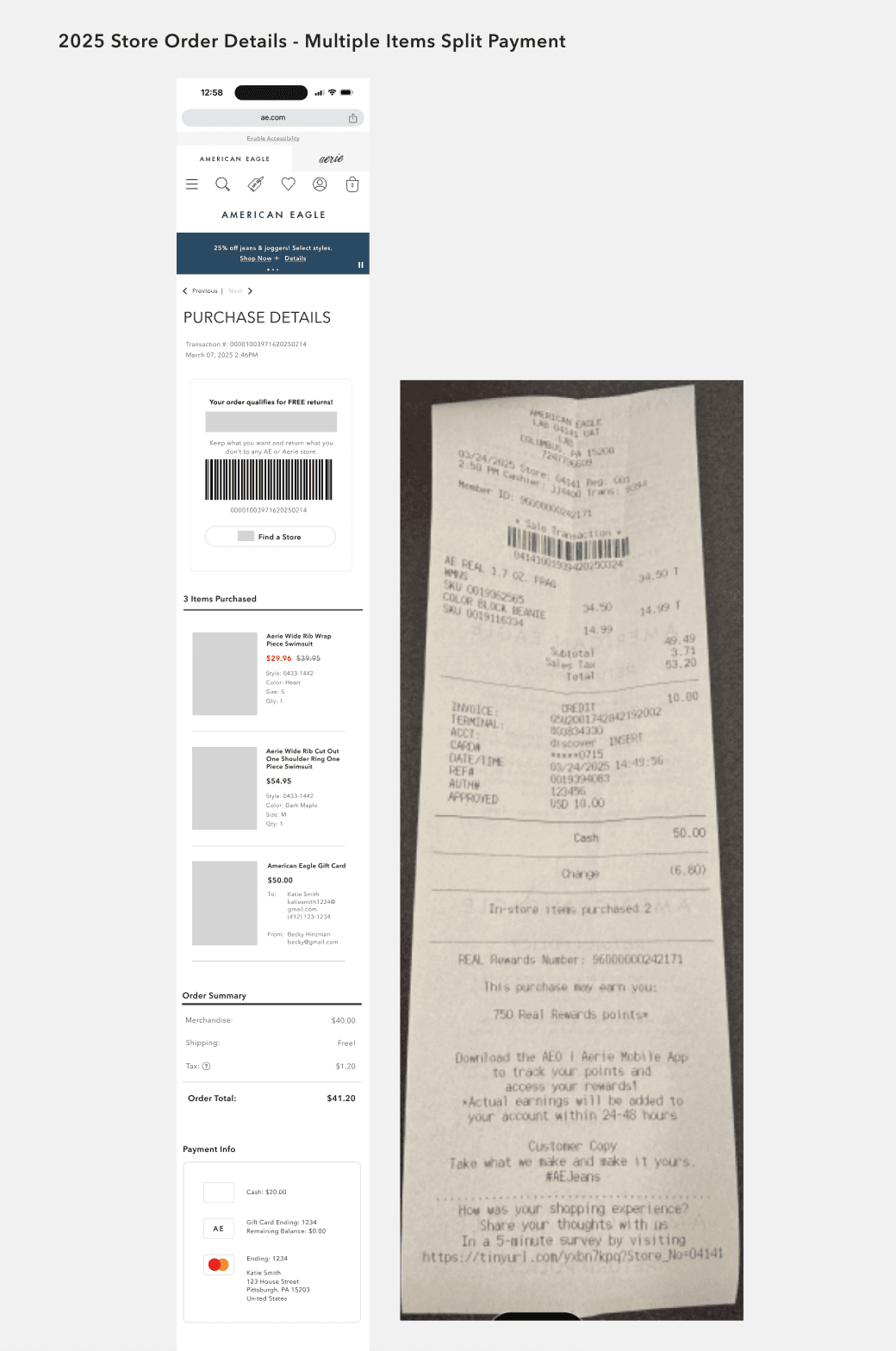
We examined store receipts across multiple transaction types: returns, exchanges, partial refunds, multi-item purchases, and bundled items. Key insights included:
Customers need clarity on what was purchased, available actions, and how transactions relate to loyalty points and online orders
Returning, reordering, or reviewing purchases was often confusing and fragmented
Overloading the interface with all details risked cognitive overload
Competitive benchmarking highlighted effective ways to display complex in-store transactions while keeping the experience understandable.
Approach & Strategy
I led efforts to translate complex receipt data into a customer-friendly experience:
Conceptualized how store transaction information should be displayed
Conducted competitive analysis to uncover best practices
Maintained alignment with stakeholders to ensure smooth integration into the new order history system
Served as a knowledge point of contact for designers, leveraging previous wireframes and domain expertise
Recommended a modular, scalable layout that works across transaction types and channels
To balance clarity with complexity, we adopted a layered, progressive disclosure approach, surfacing critical information upfront while revealing additional details as needed.
Solution Highlights
First-ever visibility into in-store purchases for customers
Clear actions for returns, reorders, and tracking
Integration with online order history for a unified experience
Modular, scalable layout accommodating multiple transaction types
Progressive disclosure to reduce cognitive load while retaining full information
Customer Impact
Easier returns, reorders, and tracking
Reduced frustration with lost receipts
Increased confidence in managing purchases
Business Impact
Reduced support tickets related to missing receipts
Integrated store and online order history
Set the foundation for future omnichannel and loyalty features
Organizational Impact
Strong cross-functional alignment on requirements and integration
Reusable conceptual frameworks for complex transaction design
Guidance for designers to implement a scalable, consistent system
Building a new store purchase history system required strategic vision, cross-functional collaboration, and empathy for real customer pain points. By translating complex receipts into clear, actionable concepts, we created a system that improves the customer experience, reduces support friction, and positions the company for future omnichannel and loyalty innovation.
01

02

03

see also